
You are hearing it everywhere: AI is going to take your job. AI is too complex for small teams. You need a PhD to understand it.
Here is the reality: The winners in this economy won’t be the ones who wait for the technology to stabilize. They will be the ones who start before they feel ready.
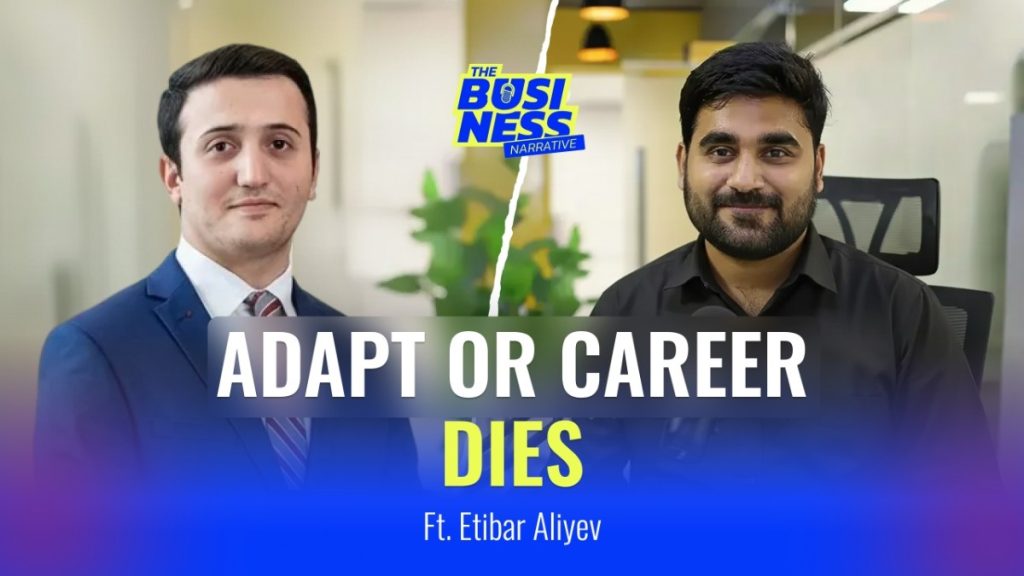
In this deep dive with AI expert Etibar Aliyev, we strip away the buzzwords to reveal exactly how founders should handle the “Job Killer” myth, the specific framework for your first AI hire, and why “Trust” is the only metric that matters.
What is Prompt Engineering?
Prompt Engineering is the strategic process of designing and refining inputs (text commands) for Large Language Models (LLMs) to generate precise, high-quality outputs. It involves providing context, constraints, and specific instructions to bridge the gap between human intent and machine understanding.
The “Job Killer” Myth vs. The Reskilling Reality
The biggest anxiety in the market right now is displacement. Is AI coming for your team?
According to Aliyev, we need to stop looking at AI as a replacement and start viewing it as a reshaper.
- The Shift: Technology rarely eliminates work altogether; it removes the drudgery.
- The Gain: If a marketing analyst spends 4 hours cleaning data, that’s waste. AI automates the cleaning so the analyst can spend those 4 hours on strategy.
We are already seeing entirely new job categories emerge:
- Prompt Engineers: Translating business needs into machine logic.
- AI Auditors: Ensuring compliance and accuracy.
- Algorithmic Ethicists: Mitigating bias in automated decisions.
The Takeaway: The challenge isn’t job loss; it’s reskilling. Businesses that invest in training their workforce to use these tools will thrive. Those who ignore it will be outpaced.
The Currency of AI is Trust
You can have the most powerful algorithm in the world, but if your team (or your customers) don’t trust it, it’s useless.
Aliyev argues that Trust is the currency of AI adoption.
If you are using AI to make decisions, you cannot treat it like a “Black Box.” You need Transparency.
- Explainability: Can you explain in plain language how the AI reached a decision?
- Accountability: Do you have protocols for when the AI hallucinates or shows bias?
- Alignment: Does the AI operate within your company’s ethical values?
If your employees know that the AI is fair, explainable, and designed to help them (not fire them), adoption follows naturally.
The “MVP” Framework: Where to Start
A common mistake founders make is trying to build “AI for AI’s sake.” They try to overhaul their entire customer service department overnight.
Don’t boil the ocean.
Aliyev suggests a Minimum Viable Product (MVP) approach:
- Identify ONE Pain Point: Find a specific bottleneck.
- Apply a Laser Focus: For example, don’t build a full AI support agent. Build an AI-powered FAQ assistant first.
- Measure the Win: If that FAQ assistant reduces ticket volume by 20%, you have a measurable business win.
“For founders, the key is not to build AI for AI’s sake, but to start with a clear business problem.” — Etibar Aliyev
The First AI Hire: The “Hybrid” Strategist
If you are an early-stage startup, who do you hire? A Data Scientist? A Machine Learning Engineer?
Hire a Hybrid.
In the early stages, you don’t need a specialist who only knows code. You need a Strategic Partner. Look for a candidate who possesses:
- Data Engineering Skills: Can get hands-on with the data.
- Business Acumen: Understands the “Why” behind the “How.”
- Communication: Can explain technical requirements to investors and non-technical executives.
As you scale, you can branch out into specialists. But your first hire must have an entrepreneurial mindset.
The Toolkit: What You Should Use Today
You don’t need to spend a fortune on enterprise software to get started. Here are the tools Aliyev recommends:
- For Coding: Cursor. It integrates VS Code and helps with debugging and code generation.
- For Presentation: Canva. Their AI features are robust for visual storytelling.
- For General LLMs: Gemini or ChatGPT. Use these for breaking down complex problems.
Pro Tip for Non-Native English Speakers: AI is becoming language-agnostic. However, if you struggle with English prompts, break your complex problem into small, logical steps. Use simple verbs for each step. The logic matters more than the vocabulary.
Conclusion
The AI landscape is moving too fast for you to wait for a “perfect time.” The winners of the next decade are experimenting, learning, and failing fast right now.
Your Next Step:
- Audit your business for one repetitive task.
- Test an off-the-shelf AI tool to solve it this week.
- Prioritize transparency to build trust with your team.
Want to hear the full breakdown? Dive deeper into the conversation with Etibar Aliyev on the The Business Narrative podcast.


![Why Your Mouth Is the Ultimate Gateway to High Performance [2026 Guide]](https://thebusinessnarrative.net/wp-content/uploads/2026/09/Podcast_Thumbnail_94-1.jpg)
