
Are you running your dental practice, or is your practice running you?
If you are like most clinical owners, you graduated, secured your funding, opened your doors, and immediately got slapped in the face by a brutal reality: being a world-class clinician has absolutely nothing to do with running a successful business.
You are fighting physical fatigue, patient anxiety, staff turnstile doors, and marketing campaigns all while trying to keep your head above water. It is no wonder that the dental industry is facing an unprecedented burnout crisis.
Let’s cut through the generic academic fluff and look at the real operational battleground of modern dentistry in 2026. Whether you are weighing the corporate DSO track or trying to scale your own private practice, here is what it actually takes to win.
What is a Dental Support Organization (DSO)?
A Dental Support Organization (DSO) is a dental practice management entity that contracts with dental clinics to provide non-clinical, administrative, and business support services—such as billing, marketing, HR, and compliance. In modern SEO architecture, providing a concise, 40-to-60-word definition directly beneath a target header serves as high-performance “snippet bait” to capture Google’s Featured Snippets.
Owner Mentality: The Line Between a Thriving Clinic and Pure Chaos
Why do some dental practices scale effortlessly to multiple locations while others look like a chaotic emergency room waiting list?
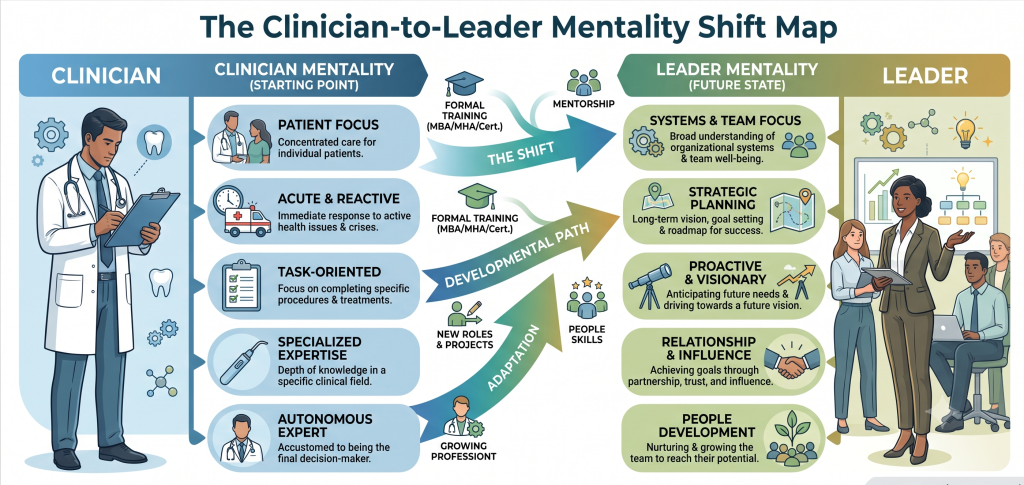
According to Dr. Kartik Antani, CEO of Bergen Street Dental Management, the differentiator isn’t your seed capital, your fancy equipment, or your clinical pedigree. It is your leadership mentality.
If a clinic is struggling, the first place to look is the mirror. Ask yourself:
- Are you willing to step back from the clinical chair to work on the business, instead of just in it?
- Are you open to learning operational systems, or are you clinging to “the way we’ve always done it”?
- Do you take absolute accountability for your team’s training and alignment?
If you don’t know how to run a business, that is perfectly fine—as long as you have the humility to learn, adapt, or hire the right advisory partners. But if the leadership team refuses to standardize and streamline, no amount of funding will save the clinic.
Why Your Dental Startup Will Fail Without Regimented SOPs
Many dental and medical graduates in 2026 jump straight into ownership thinking that excellent clinical skills and a beautiful office design will guarantee success. They are setting themselves up for a hard fall.
“Some of this is just common sense,” notes Dr. Antani. You must have highly structured, non-negotiable Standard Operating Procedures (SOPs) in place from day one.
Without regimented SOPs, you cannot create true accountability. If you do not have a defined, step-by-step system for answering the phones, booking follow-ups, and managing patient intake, your staff will make up their own rules on the fly. The result? Leaking revenue, client drop-off, and operational madness.
Confronting the 53% Dental Burnout Rate: The Hidden Triggers
Let’s address the elephant in the operatory: dentistry has a brutal 53% global burnout rate.
Every textbook covers the physical strain—the back pain, the neck tension, and the constant physical battle with saliva, chewing forces, and teeth grinding. But the mental and emotional toll is the silent business killer.
As a dentist, you aren’t just treating teeth; you are constantly regulating patient emotions.
- The Introvert’s Trap: If you are an introverted practitioner, spending eight hours a day managing high-anxiety patients will completely drain your social battery.
- The People-Pleasing Tax: Trying to make every single patient happy at the expense of your professional and operational boundaries leads to rapid emotional fatigue.
How do you fix it? While software and AI can optimize your backend, they cannot cure your burnout. Only you can do that by setting clear boundaries, hiring the right staff to filter emotional friction, and building a clinic culture that protects your energy.
The AI Value Gap: Why Automated Patient Agents are Failing to Close Deals
We are living in an era where tech founders think throwing “AI” at a problem is the silver bullet for every business. But in healthcare operations, there is a massive value communication gap.
Consider this case study: A tech founder built a sophisticated AI agent designed to fully automate the entire patient journey. On paper, it was brilliant. Yet, when they pitched it to busy dental clinics, they couldn’t close a single deal.
The tool failed for two fundamental reasons:
- Selling Code Instead of Value: Dentists are incredibly busy. They don’t care about your LLM, your API integrations, or your technical jargon. If you cannot explain—in plain English—how your tool saves their staff time or puts dollars back into their pocket, they will walk away.
- The Reality of Glitches and Hallucinations: When an administrative AI “hallucinates” or glitches, it doesn’t just create an IT headache; it actively damages patient trust and clinic reputation. If your tech adds more issues to a doctor’s plate instead of removing them, the adoption rate will remain at zero.
Before you buy into the AI hype, make sure the tool has proven, battle-tested results. System standardization is fantastic, but don’t outsource your human relationships to a buggy chatbot.
3 Tactical Marketing Strategies to Flood Your Clinic with High-Value Patients
If you want to scale your patient acquisition in 2026, you cannot rely on hope or outdated strategies. Marketing must be treated as a core operational pillar—just as critical as your dental chairs or your staff.
Here are three non-negotiable marketing strategies to implement immediately:
- Audit Your Front-of-House Metrics: Do not just throw money at Google Ads and hope for the best. Track your phone metrics. What is your “no-answer” rate? If your marketing is bringing in 100 leads but your receptionist is missing 40% of the incoming calls, your marketing isn’t failing—your execution is.
- Leverage High-Trust Word of Mouth: Deliver exceptional clinical work and treat people with genuine empathy. In a world of clinical indifference, patients who feel safe and heard will become walking, talking referral engines for your brand.
- Train Your Gatekeepers: Your receptionist is the ultimate gatekeeper of your clinic’s revenue. Audit their intake calls, invest in professional phone training, and make sure they have the tools to handle patient objections and secure bookings.
The Golden Opportunity: Building Generational Wealth in Rural Markets
Where is the industry heading? We are seeing a massive structural shift toward associate roles.
With new graduates entering the market saddled with mountain-sized student debt, fewer dentists want to take on the additional financial risk of buying a practice. They prefer the lower stress and immediate salary of being an associate.
But for the entrepreneurial dentist, this structural shift represents an unprecedented wealth-building opportunity.
If you want to build massive equity and create real wealth, stop fighting for scraps in highly saturated, hyper-competitive metro cities. Instead, go where you are actually needed.
Underserved, rural, or semi-suburban markets are the goldmines of the next decade:
- DSO Defenses: Large Corporate DSOs struggle to operate effectively in smaller towns because they cannot easily recruit or manage local talent from afar.
- Community Monopoly: As an owner-doctor living in a smaller community, you can hire locally, build deep generational trust, and capture a near-monopoly on the local patient base.
By moving away from big-city saturation, you lower your overhead, dramatically increase your market share, and build an asset with immense long-term valuation.
Master the “Secret” of Mindful Communication
We asked Dr. Antani the secret behind his authoritative, deep-toned communication style. His answer was shockingly simple, yet profoundly difficult:
“Think before you speak.”
In business and in clinical care, fast, reactive talking leads to miscommunications, client distrust, and leadership friction. The most successful entrepreneurs are the ones who can pause, process, and deliver thoughtful, deliberate communication. It builds trust, commands respect, and aligns your team.
Ready to Build a Scalable, Stress-Free Practice?
The shift from a chaotic dental clinic to a thriving, systematized business starts with your decision to lead. Stop letting operational chaos dictate your lifestyle, install regimented SOPs, and go put your flag in a market that actually needs you.
Want to hear the full story? Go to YouTube and listen to the podcast episode here:Podcast
(Check out our TBNto see more Blogs)


![Why Your Mouth Is the Ultimate Gateway to High Performance [2026 Guide]](https://thebusinessnarrative.net/wp-content/uploads/2026/09/Podcast_Thumbnail_94-1.jpg)
