
From the outside, a career in clinical medicine or dentistry appears prestigious, comfortable, and financially secure. Yet behind closed doors, a growing number of healthcare practitioners quietly struggle with stagnation, emotional exhaustion, and career boredom.
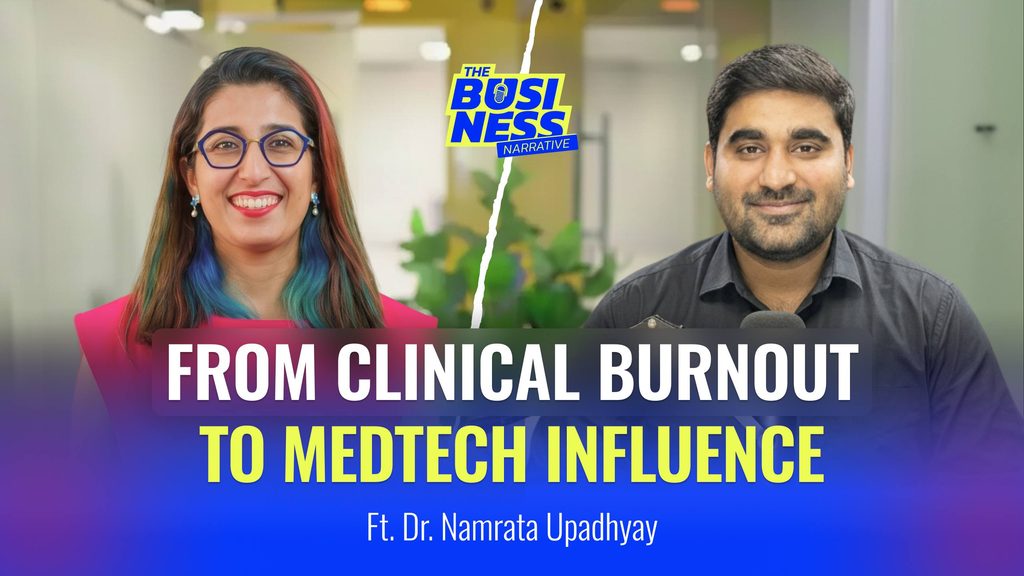
In a recent episode of The Business Narrative, Dr. Namrata Upadhyay, Founder of FreeDen and creator of the Premium Dental Advisor program, shared her journey of leaving clinical dentistry, navigating relocation challenges, and launching a successful career in MedTech consulting and entrepreneurship.
Here is a look at the hidden realities of clinical life, why the MedTech industry needs doctors, and how clinicians can build alternative revenue streams without abandoning patient care.
The Hidden Reality: Burnout, Boreout, and Financial Stress
The medical field operates under an unwritten rule: practitioners must always project authority and control. Admitting career dissatisfaction is heavily stigmatized. However, clinical practice comes with unique structural limitations that often lead to three major hurdles after 5 to 10 years in practice:
- Burnout: Managing back-to-back patients, operating a business, handling administrative overhead, and managing staff creates physical and emotional fatigue.
- Boreout (Stagnation): Unlike traditional corporate structures, clinical practice lacks standard promotions. Most clinical skills are taught early on. After a decade of performing identical procedures, the intellectual challenge diminishes.
- Financial Stress: Rising overhead costs, student debt, and intense local competition mean that clinical practice does not automatically yield financial freedom.
When clinicians reach this 10-year mark, many feel trapped because they believe patient care is their only viable skill.
The Pivot: Overcoming Geographic and Professional Barriers
When Dr. Namrata relocated to Switzerland 12 years ago, she faced a common barrier for foreign-trained clinicians: strict regulatory hurdles that would have required her to redo seven years of dental education from scratch in French.
Recognizing that she already possessed deep clinical expertise, she refused to restart her education. Instead, she evaluated where her medical knowledge could add value outside the clinic. This led her into the pharmaceutical, medical device, and MedTech sectors.
The transition from a fast-paced clinic to a corporate environment required a total behavioral shift:
- From Authority to Teamwork: Clinicians are trained to make authoritative, rapid decisions independently. Corporate success, by contrast, relies on cross-functional collaboration, consensus, and gradual iteration.
- From Active Movement to Screen Work: Moving from a physical, high-energy environment to desk-bound analytical work requires intentional adaptation.
Bridging the Gap Between Manufacturers and Clinicians
One of the largest opportunities for healthcare entrepreneurs lies in resolving the communication disconnect between medical device manufacturers and the practitioners who use their products.
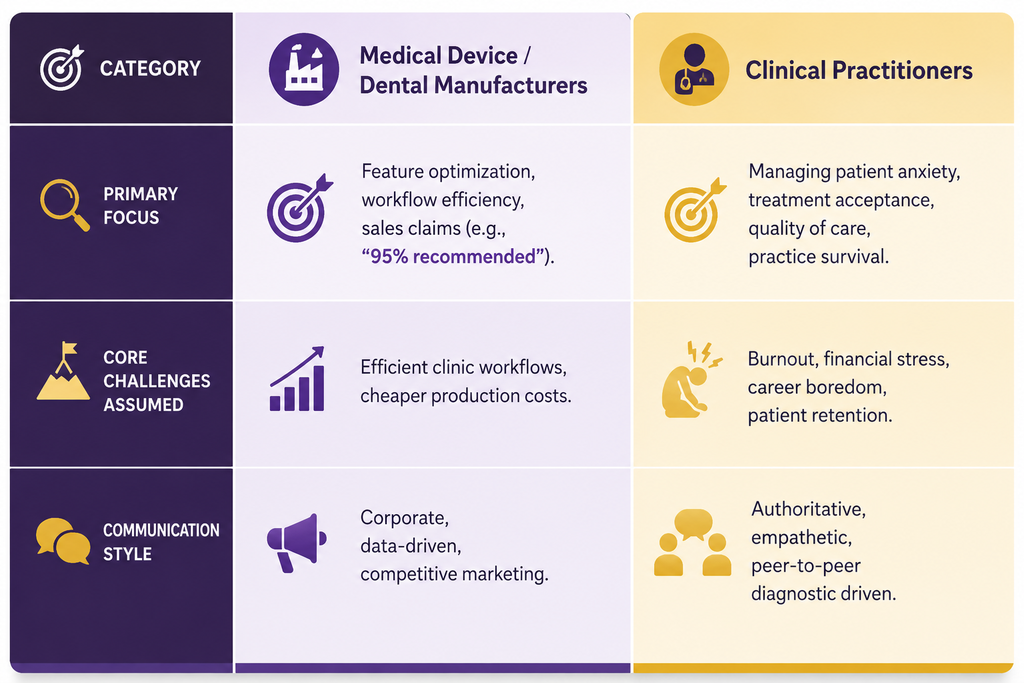
Device manufacturers often design products based on high-level assumptions or feedback from a narrow group of traditional advisors. As a result, products flood the market competing on minor feature variations while missing the real, daily pain points of the clinician.
By stepping into advisory and product innovation roles, doctors can teach manufacturers how to build tools that fit real-world clinical needs.
Strategic Diversification vs. Reactive Quitting
When clinicians experience severe burnout, their first instinct is often reactive: quitting patient care entirely to pursue completely unrelated ventures. This often results in a significant loss of specialized talent.
A more effective approach is strategic career diversification.
How to Build a Hybrid Career
- Maintain Part-Time Practice: Active clinical work keeps your knowledge updated regarding current technology, regulatory shifts, and patient needs.
- Monetize Clinical Expertise: Offer freelance consulting, product advisory, or clinical evaluation services to MedTech, biotech, and dental companies on weekends or administrative days.
- Treat Innovation as Risk Mitigation: Rather than relying 100% on clinical income, create multiple income streams through consulting, advisory equity, or digital platforms.
Overcoming Growth Obstacles
For clinicians looking to scale beyond the clinic, success depends on two core mindset shifts:
- Understand Timing: Building consulting authority or launching a MedTech startup takes time. Long-term strategy must replace expectations of immediate returns.
- Practice Discomfort at Home: Scaling a business is not just an external effort; it begins with changing daily habits. Reclaiming free hours on evenings and weekends to upskill, take courses, or conduct market research builds the baseline discipline required for entrepreneurship.
Leaving patient care does not have to be an all-or-nothing decision. By viewing clinical experience as a foundational asset rather than a rigid boundary, doctors can solve broader healthcare problems, improve industry products, and build sustainable careers on their own terms.
Want to hear the full story? Go to YouTube and listen to the podcast episode here: PODCAST
(Check out our TBN to see more Blogs)


![Why Your Mouth Is the Ultimate Gateway to High Performance [2026 Guide]](https://thebusinessnarrative.net/wp-content/uploads/2026/09/Podcast_Thumbnail_94-1.jpg)
