
We’ve been told a lie. The “standard” timeline says you go to school, get a degree, work for twenty years, and then—maybe in your 40s—you start a business.
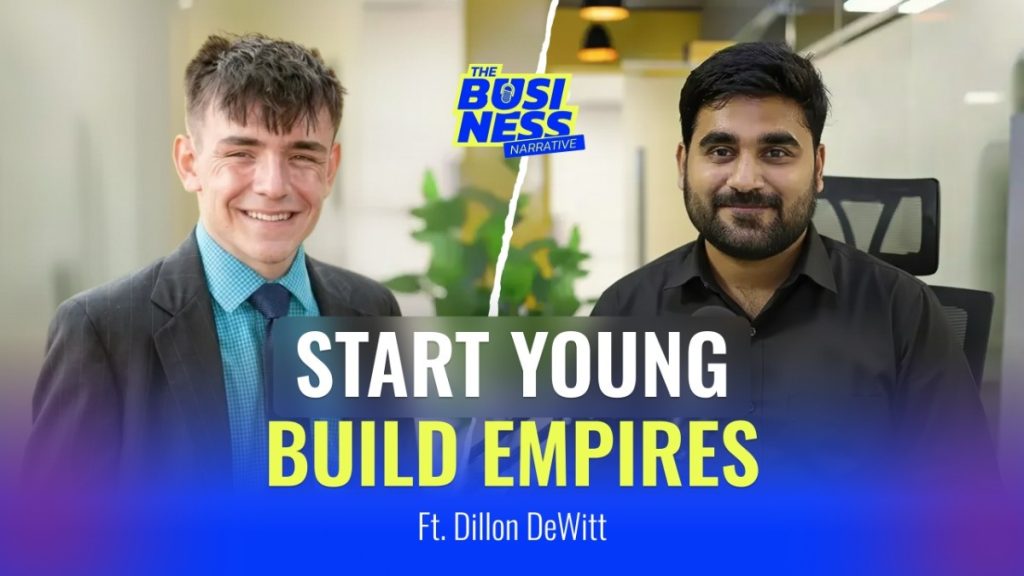
In our latest podcast episode, young founder Dillon DeWitt shattered that myth. As a web developer, student, and Eagle Scout, Dillonis proving that entrepreneurship doesn’t require a certain age; it requires a specific mindset.
1. Market Your Personality, Not Just Your Code
One of the most profound takeaways from Dillon is his approach to branding. Many freelancers focus solely on their technical skills (like Python, React, or Design). Dillon argues that authenticity is your greatest competitive advantage.
“Authenticity always wins. You’re not just writing code for clients; you’re marketing yourself. You should show your soft skills—teamwork, flexibility, and communication—alongside your technical expertise.”
Clients don’t just buy a website; they buy the person building it. By showing who you are and how you’ve grown, you build a level of trust that a sterile portfolio can never achieve.
2. From Boy Scouts to the Boardroom
Surprisingly, Dillon’s foundation wasn’t a coding bootcamp—it was the Boy Scouts. Only 4% of Scouts reach the rank of Eagle Scout, and the skills Dillon learned there are the pillars of his business today:
- Presenting Skills: Pitching campout ideas to a troop is the ultimate training for pitching projects to a CEO.
- Financial Literacy: Learning to budget for meals and manage fundraising goals translates directly to managing business revenue.
- Resilience: The “never give up” attitude of scouting makes the word “No” much easier to handle in business.
3. Forget Fiverr: The Secret to Finding Clients
While many newbies flock to platforms like Fiverr or Upwork hoping to become “overnight billionaires,” Dillon took a different route. His secret? Proactive Outreach.
Instead of waiting for the algorithm to pick him, Dillon recommends:
- Direct Outreach: Identify a problem on a company’s website and reach out with a solution.
- Leveraging Mutuals: Using your network for recommendations.
- Joining Teams: Finding people who have a project but lack your specific technical skill set.
“You can’t just wait around for the opportunity to come,” Dillon says. “You have to go find the opportunity and seize it.”
4. The “Phase” Method: Balancing School and Business
How does a student manage high school, college courses (dual enrollment), and a freelance business? Dillon avoids the “domino effect” by breaking projects into phases.
Instead of one giant deadline at the end of the month, he sets micro-deadlines for every 2-3 weeks. This allows him to work in “chunks” during his free periods at school or at home, ensuring that if one phase hits a snag, the whole project doesn’t collapse.
5. Failure is Just a Data Point
To Dillon, a “No” isn’t a dead end—it’s a lesson. Whether you’re turned down because of your age or your price, every rejection is an opportunity to improve your presentation and show how you can grow.
Key Takeaways for Aspiring Young Entrepreneurs
- Start Now: Don’t wait for a degree or a specific age.
- Be a “Whole” Professional: Combine your technical skills with the leadership and communication skills you learn in daily life.
- Be Proactive: The best clients are found through direct connection, not just passive profiles.
Final Thought: If a 17-year-old can manage a dual-degree and a thriving freelance business, what’s stopping you from taking that first step today?


![Why Your Mouth Is the Ultimate Gateway to High Performance [2026 Guide]](https://thebusinessnarrative.net/wp-content/uploads/2026/09/Podcast_Thumbnail_94-1.jpg)
